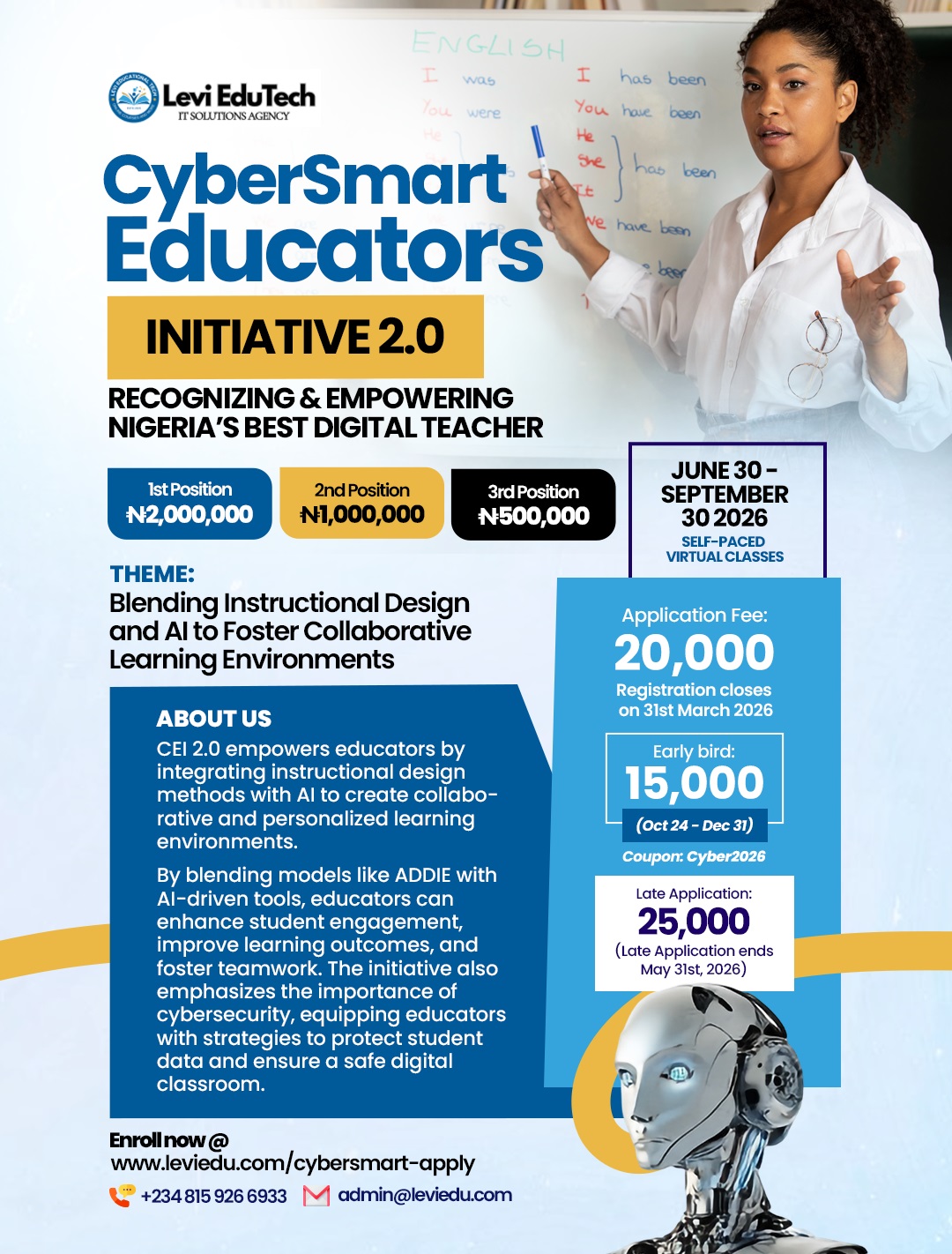
Seminar Spotlight: Equipping Nigerian Schools for AI Threats
As part of the Cybersmart Educators Initiative, a pivotal seminar titled:
“AI-Powered Cyber Threats in Education: How Nigerian Schools Can Detect and Defend”
was held to address this growing concern. Led by Dr. Shenbagaraj Ramachandran, a Gen AI Certified eLearning expert, the session offered practical insights into:
🔹 Understanding AI-Powered Threats
- How AI is used to exploit school systems
- Real-world case studies from global and African contexts
🔹 Tools and Techniques for Defense
- AI-based threat detection platforms
- Multi-layered security frameworks
- Role of predictive analytics in cyber defense
🔹 Policy and Governance Recommendations
- Creating cybersecurity policies tailored for schools
- Training staff and students in digital hygiene
- Building partnerships with cybersecurity firms
Why Nigerian Schools Are Vulnerable
Several factors make Nigerian educational institutions susceptible to AI-driven attacks:
- Limited cybersecurity budgets
- Low awareness among staff and students
- Rapid digital transformation without adequate safeguards
- High-value data (student records, financial info, exam materials)
These vulnerabilities are being exploited by both local and international cybercriminals. The rise of “Yahoo boys and girls” is not just a social issue—it’s a cybersecurity crisis.
Meet the Expert: Dr. Shenbagaraj Ramachandran
Dr. Ramachandran brings over two decades of experience in AI, cybersecurity, AR/VR, and blockchain. His work spans academia and industry, with leadership roles at Mobile Tutor and Symbiotic Infotech. He holds a PhD in AI-Based Adaptive Learning and has trained thousands of educators across India.
His message to Nigerian educators is clear:
“AI is not just a tool—it’s a battlefield. Schools must evolve from passive users to active defenders.”
What Schools Can Do Today
Here are 5 immediate steps Nigerian schools can take:
Conduct Cybersecurity Audits
Identify weak points in your digital infrastructure.
Train Teachers and Students
Basic cybersecurity literacy can prevent most breaches.
Implement Multi-Factor Authentication (MFA)
Add layers of protection to school systems and accounts.
Use AI Defensively
Deploy AI tools that monitor, detect, and respond to threats.
Create a Cybersecurity Policy
Define roles, responsibilities, and response protocols.
Conclusion: From Vulnerability to Vigilance
AI is transforming education—but it’s also transforming cybercrime. Nigerian schools must recognize this shift and respond with urgency, strategy, and education.
At Cybersmart Educators Initiative, we’re committed to building a generation of educators who are not just tech-savvy—but cyber-resilient.
Because in the age of AI, awareness is protection, and education is power.


 Levi EduTech